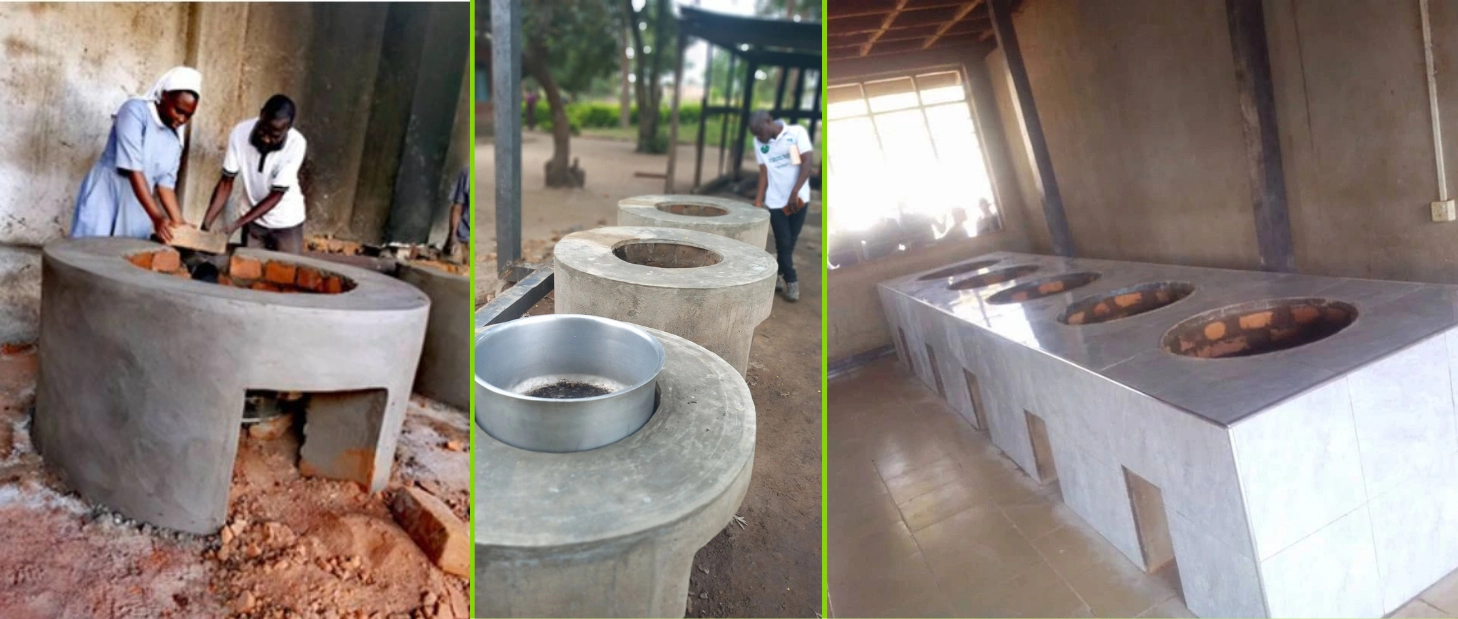
Chabri Energy has completed the delivery of 30 institutional brick stoves across twelve schools and one prison in the Geita region, in partnership with Geita Gold Mine (GGM) and Geita District Council. The programme ran through 2025. Every stove is built and up and running.
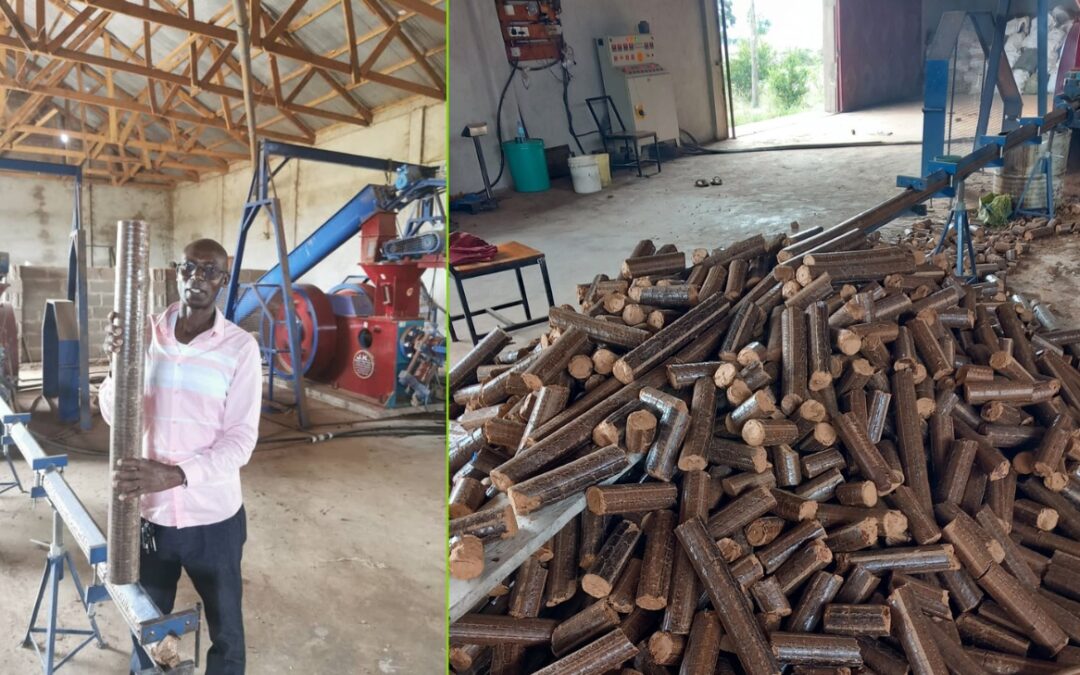
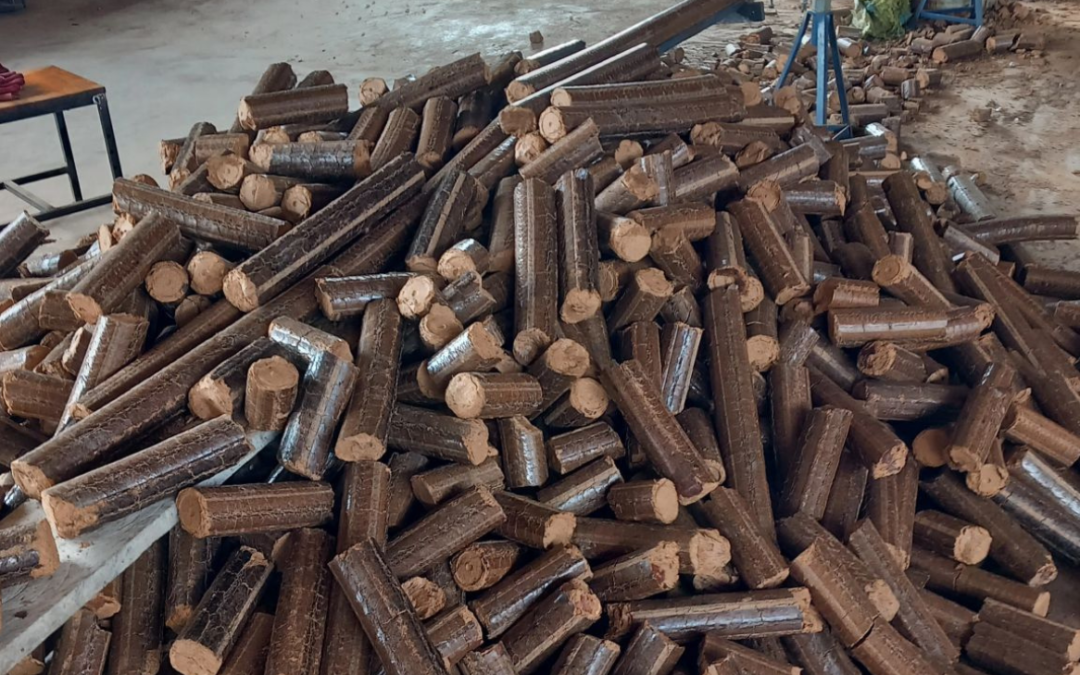
Alongside the stoves, the programme delivered 264 tonnes of KuniSMART briquettes. Several schools have since returned on their own initiative to buy fuel. That is the clearest validation the programme could ask for: institutions that cook daily are now spending their own money to keep the system running.
The institutions
Twelve of the sites are public primary schools across rural Geita, with 200 to 700 students each. Boarding students eat two meals daily; day students eat lunch. The thirteenth is a prison, where cooking volumes run higher still. Meals have always been cooked on three-stone open fires fed with firewood collected from surrounding land, in kitchens staffed by two to four women working in dark, smoke-filled rooms.
The institutions had wanted to change this for years. Imported stainless steel stoves existed but cost more than their budgets could carry. Donor-funded equipment from earlier cycles had broken down with no maintenance behind it. So the open fires remained.
The approach
We set four conditions. The stove had to be buildable from local materials. Repairable by anyone the institution could reach. Cheap next to the imports. And a real gain in fuel use, smoke, and cooking time, without asking kitchen staff to change how they work.
Each stove is custom-built on site. We assess the kitchen, the cooking volume, pot sizes, room dimensions, ventilation, and adjust the stove to the kitchen rather than the kitchen to the stove. Construction took three to five days per site.
The combustion principle is gasification: fuel burns in two stages, releasing gases that burn at high temperature before the remaining biomass becomes charcoal that completes the heat curve. The result burns hotter, longer, and dramatically cleaner than the fire it replaces.
The stove is optimized for KuniSMART briquettes but accepts firewood, which let institutions adopt the stove before committing to the fuel. That flexibility lowered the risk of the switch, and it mattered.
What the programme taught us
Installation time compresses. Our first stoves took five to six days; by the end of the programme we built in three to four, through modular fabrication of the metal components at our Mwanza facility and a standardized assembly sequence. An institution cannot stop cooking for a week, so faster installation directly improves the offering.
Chimney venting is standard, not optional. We assumed clean combustion would handle the smoke. It did not, fully: enclosed kitchens with limited airflow still collect enough residual smoke to matter for the staff inhaling it daily. Every installation came to include integrated venting. A small change with disproportionate impact on staff health.
The stove is built to the pots. Institutions cook in specific aluminum pots they already own, and stoves built to standard specifications left a small but real performance gap when the actual pots did not match. Every installation came to start by measuring the institution's pots.
Repairability beats sophistication. We chose techniques any competent local mason can maintain, giving up some efficiency to produce stoves institutions keep running without us. The donor-funded stainless steel stoves from earlier cycles often sit unused, awaiting parts that never came. Ours do not fail that way, because the parts that fail are parts a local mason can replace.
The economics compound. Institutions report fuel reductions of 40 to 60 percent against their open fires. Over an academic year the savings are substantial, and combined with staff health and cooking time, the case for adoption stops being abstract. The schools now buying their own briquettes are the proof in spending.
What this means for institutions
Donor funding is not the only path. Geita Gold Mine funded this programme as community engagement, but institutions elsewhere have funded installations through their own budgets, parent associations, religious networks, and small regional grants. The cost is low enough to plan around. No institution should wait for a major donor.
Regulation favors switching now. Tanzania prohibits charcoal and firewood in institutions cooking for more than 100 people. Institutions covered by the ban must switch regardless of their preferred timeline. Our stoves running on KuniSMART are compliant, at a fraction of the cost of imports or LPG systems.
The supply chain is local. Briquettes are produced in Mwanza from waste sourced across the Lake Zone. Institutions adopting the system avoid the price volatility that has hit LPG and other imported fuels.
What comes next
With Geita complete, we are in discussions with corporate, government, and faith-based partners about expanding to other regions. The programme produced the playbook. The infrastructure to replicate it across the Lake Zone and beyond is in place.
Schools, institutions, or partners interested in an installation can reach us directly; we conduct on-site assessments across the Lake Zone. The conversation starts with a call, a message, or a visit to our Kisesa facility.
What we built in Geita was not a pilot. It is how institutional clean cooking scales in Tanzania.
0 Comments